
Breathedge 2 Fast Travel Guide
Stop boosting manually through vacuum. Here is how to actually move across the galaxy.
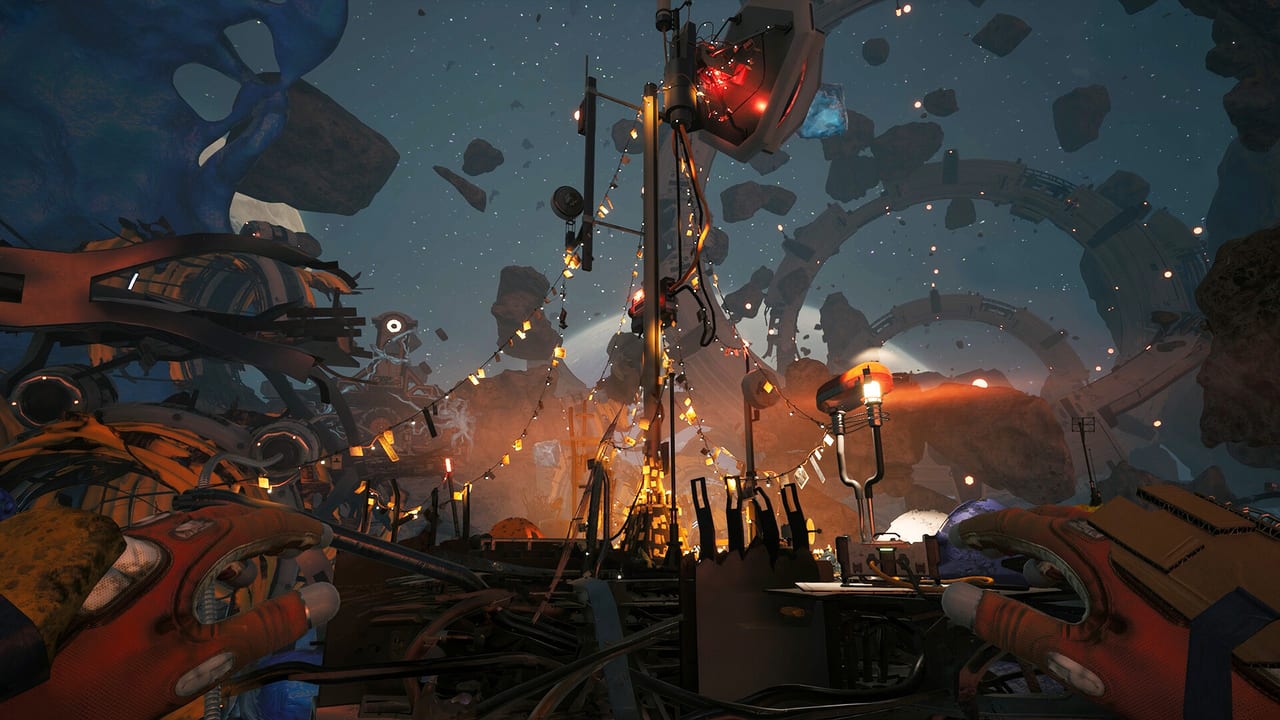
Breathedge 2 does not have a traditional fast travel system. There is no menu, no map click, no instant teleport to a discovered location. Moving through the galaxy requires vehicles, planning, and understanding the infrastructure that exists between your starting position and wherever you need to go. This page is the complete guide to moving efficiently in Breathedge 2.
If you want the ZAZ-1 specifically, see vehicles. If you want the walkthrough route through Chapter 1, see walkthrough. This page covers the movement system itself.
Why Breathedge 2 has no instant travel
The game design deliberately avoids instant travel. Oxygen management, resource planning, and traversal are survival mechanics, not inconveniences to skip. The developers described the experience as a journey through space, not a loading screen simulator.
This means every trip has weight. Planning a route, managing oxygen, and choosing the right vehicle for the distance are all part of the gameplay loop. Understanding how to move efficiently is not optional optimization — it is survival.
The ZAZ-1 — your primary fast travel vehicle
The ZAZ-1 spacecraft is the closest thing Breathedge 2 has to fast travel. Once built, it transforms long-range traversal from a survival challenge into a logistics problem.
Why the ZAZ-1 changes movement:
- Unlimited oxygen for the driver — The ZAZ-1 provides oxygen to the driver, removing oxygen management from the equation during vehicle travel
- Extendable arm — Collect resources without exiting the vehicle
- Passenger capacity — Transport crew members between locations
- Speed — Cross large gaps in a fraction of the time EVA would require
The ZAZ-1 is not instant travel. You still need to launch, navigate, and land. But it effectively serves as the game’s fast travel system because it removes the oxygen constraint that makes manual traversal dangerous.
Transportation platforms
Transportation platforms are infrastructure nodes scattered across the debris field. They function as automatic gates between different zones.
How transportation platforms work:
- They open automatically when a vehicle approaches
- They close automatically after transit
- They can break down and require repair
- They handle small vehicles only, not large spacecraft
Finding transportation platforms:
- Look for distinct platform structures between major zones
- Mark them on your mental map as you discover them
- They often appear near station entrances and major landmarks
When platforms break:
Carry repair materials (Metal, Electronics, Wire) when traveling through active zones. A broken platform blocks transit until repaired. This is both an obstacle and an opportunity — a broken platform often means less traffic in that zone.
EVA movement — the baseline traversal
Before vehicles, spacesuit thrusters are your only option. EVA movement uses oxygen directly and requires constant management.
EVA movement habits:
- Boost in short bursts rather than continuous thrust
- Use landmarks for orientation: ring wrecks, antenna masts, string-light camps
- Plan return routes before leaving a safe zone
- Monitor oxygen constantly during EVA
- Return at one-third oxygen minimum
EVA vs vehicle comparison:
| Factor | EVA | ZAZ-1 |
|---|---|---|
| Oxygen cost | High — consumes suit oxygen | None for driver |
| Speed | Slow | Fast |
| Resource collection | Manual | Extendable arm |
| Passenger capacity | None | Full crew |
| Best for | Short hops, emergencies | Long distances, exploration |
Route planning for efficient travel
Efficient travel in Breathedge 2 is about planning, not speed. The habit that separates experienced players from beginners is route thinking.
Route planning principles:
- Identify your destination and the nearest transportation platform or station
- Check oxygen requirements — can you make the trip on EVA, or do you need the ZAZ-1?
- Plan a waypoint — choose intermediate stops for long routes
- Consider cargo — carry weight affects boost efficiency
- Time of day matters — some routes are safer during specific in-game periods
The efficient travel loop:
- Fill oxygen and satiety at your base
- Launch ZAZ-1 or begin EVA
- Travel to the nearest transportation platform or waypoint
- If using ZAZ-1, collect resources with extendable arm during travel
- Land or dock at your destination
- Complete objectives
- Return via the same route or an alternative
ZAZ-1 travel tips
Before departure:
- Confirm oxygen is full even though ZAZ-1 provides unlimited oxygen for you
- Passengers still use suit oxygen — ensure crew has adequate supplies
- Check that the destination is reachable — some areas require specific route approaches
During travel:
- Use the extendable arm to collect resources without stopping
- Monitor for hostiles — Coffinbots can appear in transit zones
- Keep emergency Purified Oxygen accessible even inside the ZAZ-1
After arrival:
- ZAZ-1 oxygen advantage applies only while inside — EVA after landing consumes suit oxygen
- Plan for post-landing oxygen needs before exiting the vehicle
Understanding zone transitions
The debris field is divided into zones with distinct characteristics. Moving between zones requires understanding what each zone offers.
Zone types:
- Safe zones — Stations and shuttle interiors with refill points. Rest and resupply here.
- Transit zones — Areas between stations. Moderate risk, limited resources.
- Hazard zones — High-risk areas with hostile activity or environmental dangers. Travel through only when necessary.
Zone transition tips:
- Safe zones often contain transportation platforms
- Hazard zones should be traversed quickly with the ZAZ-1
- Mark discovered transitions on your mental map
What is not fast travel
Breathedge 2 does not include:
- Instant teleport to any discovered location
- Map-based fast travel menus
- Warp jumps (planned for 1.0)
- Planetary surface travel (planned for 1.0)
- Personal spacecraft beyond the ZAZ-1 (planned for 1.0)
The roadmap promises additional transportation options in future updates. When warp jumps and planetary surfaces arrive, this page will be updated to reflect the new systems.
The practical travel hierarchy
For any given journey in Breathedge 2:
- Short distance (< 100m): EVA with suit thrusters
- Medium distance (100–500m): EVA with oxygen chaining between waypoints
- Long distance (> 500m): ZAZ-1 for oxygen-free traversal
- Zone transitions: Transportation platforms for vehicle transit
This hierarchy keeps oxygen management manageable and ensures you always have a return plan.
Common travel mistakes
Mistake 1: Boosting straight to a distant marker
The temptation is to head directly toward the objective. The problem is that distant markers often require multiple intermediate stops. A direct approach burns oxygen and leaves no fallback position.
Mistake 2: Ignoring transportation platforms
Transportation platforms are easy to miss if you are not looking for them. They often appear as distinct structures near station entrances. Discovering and remembering them dramatically improves route efficiency.
Mistake 3: Forgetting the return trip
Experienced players always plan for the return. Before leaving a safe zone, they confirm they have enough oxygen to return, not just to arrive.
Mistake 4: Overloading before a long trip
A full backpack reduces boost efficiency. Before long-distance travel, deposit excess resources at a storage point and travel light.
The galaxy is large. The Chicken does not care about your travel speed. But your oxygen meter definitely notices when you boost inefficiently.
For vehicle details, see vehicles. For the Chapter 1 route, see walkthrough. For oxygen chaining specifically, see oxygen.
Frequently Asked Questions
Quick answers to the most common questions.
Does Breathedge 2 have fast travel?
There is no instant teleport system. The ZAZ-1 spacecraft serves as the game's fast travel equivalent by removing the oxygen constraint from long-distance travel.
What is the ZAZ-1 and why does it matter for travel?
The ZAZ-1 is a spacecraft with unlimited oxygen for the driver. It effectively functions as fast travel because it removes oxygen management from the equation during vehicle travel.
What are transportation platforms?
Automatic infrastructure nodes between zones. They open when vehicles approach and close after transit. They can break down and require repair materials.
Can I use the ZAZ-1 to travel anywhere?
The ZAZ-1 handles open-space travel. Some areas may require specific approach routes. Transportation platforms handle zone transitions for vehicles.
Will there be more fast travel options?
The roadmap mentions warp jumps and planetary surface travel for 1.0. These will add more fast travel options when they arrive.