
Breathedge 2 Map Hub
Wrecks, shuttle stations, canyon rock, and the star systems you cannot land on yet.
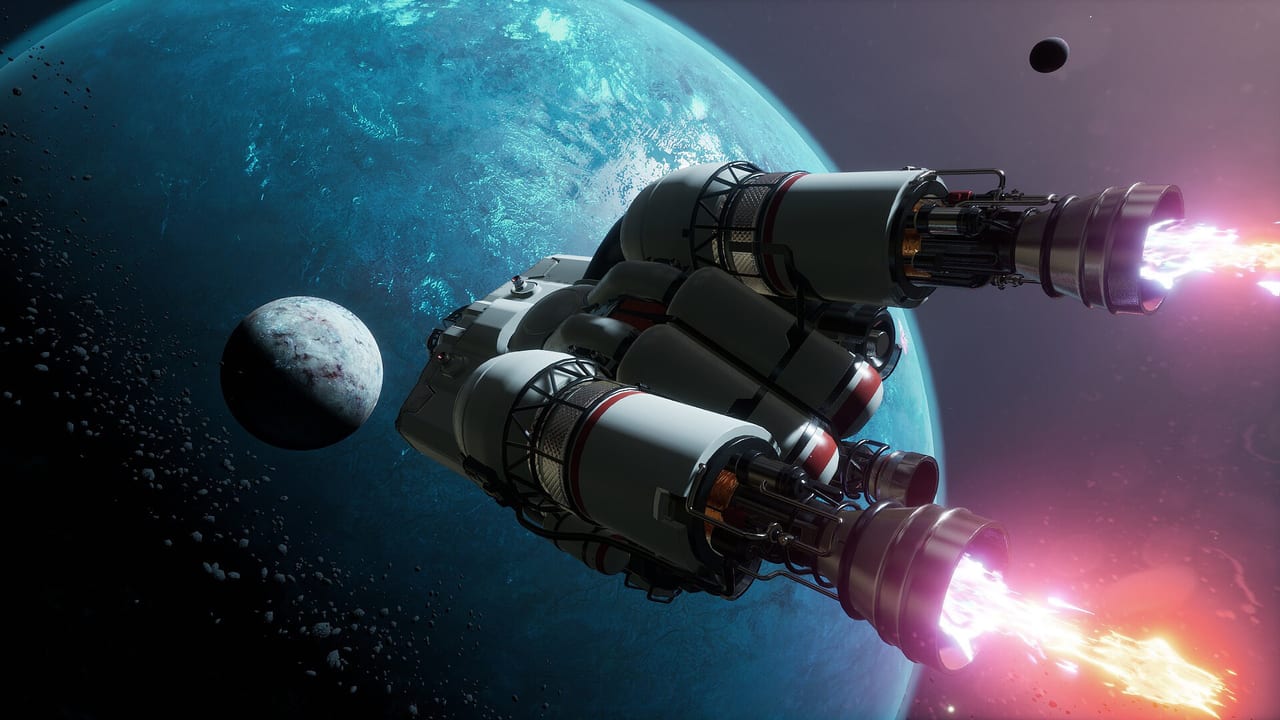
Breathedge 2 is a story-driven adventure where exploring the world is a major part of the experience. That world is not one corridor. Official copy describes multiple distinct zones, each with its own rules, resources, and opportunities, plus diverse star systems, planets in the backdrop, and floating deceased passengers. Early Access on 31 August 2026 ships the first major chapter and a large area, not the finished galaxy.
This hub is how to think about space so you stop boosting at a skybox. Use stations for wrecks and interiors. Use systems for the bigger picture and the Canyons-scale scenery. Use the walkthrough when a marker is a job, not a biome.
How the map is structured
Think in three scales:
- Interior — shuttles, cabins, modules, suitcases, pipes. This is where plastic lives.
- Local space — a debris field around a station, taxi, ring wreck, or string-light camp. This is where you EVA, recharge, and die of oxygen. Survival.
- System — planets, canyons, other stars. Beautiful, mostly backdrop in the opening. Landing on planets is a later roadmap beat.
The Canyons teaser in the middle of this page is the studio showing off a visual identity: rock, scale, a place that is not “another metal corridor.” It is also a reminder that a trailer location can be later content. If you cannot reach a canyon in the first chapter, that is scope, not a secret wall.
What Early Access is allowed to contain
Developers: the first drop should feel like an opening chapter that remains itself through 1.0, not a half-empty map they will slowly furnish. Missing compared to the full pitch: some major mechanics (building, full personal transport), later story, additional characters, planetary surface gameplay, warp jumps.
So your mental map should be dense and local, not galactic. Learn the shuttle station. Learn Chuck-class unique wrecks. Learn which way the planet sits so you can orient without a compass. Then loot in radii around oxygen and recharge posts.
Navigation habits
- Face a landmark before you leave it: antenna, ring, taxi, Cosmostation sign, string lights.
- Turn around after 20 seconds of boosting and confirm you can still identify it.
- Do not chase a planet. Chase a wreck.
- If a marker is absurdly far, check Early Access before you empty a tank.
- Vehicles: the orange shuttle is a local tool. The dual-engine spacecraft in screenshots is the fantasy the roadmap is selling. Do not assume you already own the second one.
When you know the local graph, crafting gets easier because you remember which wreck had electronics. When you do not, you will reread getting started from a loading screen. The map is solved when the debris field has names in your head. Until then, it is just a very pretty way to suffocate.
Frequently Asked Questions
Quick answers to the most common questions.
Is there a full galaxy to fly at Early Access launch?
No. You get a large first-chapter area. Later systems, planets you can land on, and warp travel are roadmap items.
What is Canyons?
A re-reveal visual and location identity the developers posted with a teaser. Treat trailer geography as possibly later-chapter until you can actually fly there.